It was the kind of pronouncement that makes you pause mid-sip, not for its insight but for its timing. Gurbacs, a Tether advisor, declared Bitcoin 'underpriced' at $65,000, pointing to a market structure 'far superior to the 2021 leverage-driven top.' The tweet rippled through feeds, a familiar echo from a familiar voice. But as I sat in my Melbourne apartment, tracing the ghost in the whitepaper’s code, I wondered: has anyone stopped to ask what kind of ghost we are now chasing?
Context demands a glance at 2021. That top was built on margin lending, retail frenzy, and the myth of 'digital gold' as a get-rich-quick vehicle. Today’s $65,000 feels different—ETF flows, corporate treasuries, and quieter accumulation. Gurbacs calls this structure superior, and technically, he is right. Leverage ratios are lower; holders are more patient. Yet structure is not identity. The 2017 ICO mania taught me that technical correctness is secondary to narrative cohesion. I audited "Project Etherium" that year, a whitepaper laced with visions of digital sovereignty, and found an empty economic model. The market didn't care. It bought the story, not the code. Today, we are buying a different story: Bitcoin as Wall Street’s obedient asset.
Core to this is the narrative mechanism behind Gurbacs’ claim. He argues the absence of speculation-driven debt makes this rally sustainable. The data supports him: open interest on futures relative to spot volume is down; ETF flows are organic. But what he fails to mention—perhaps cannot afford to—is that this structure comes at a price. The pixel that holds a soul is being replaced by a cold, institutional ledger. In 2020, during DeFi Summer, I watched Compound’s yield farming exclude retail users who lacked the capital to navigate complex strategies. I started a "Plain English DeFi" series to translate APY into human freedom. That taught me that accessibility is the true driver of mass adoption. Yet here we are, with Bitcoin adoption being driven by BlackRock and Fidelity, not by Satoshi's vision of peer-to-peer cash. The structure is superior for stability, but stability is not the same as soul.
A contrarian view: maybe Bitcoin isn’t underpriced at $65,000—maybe it’s overpriced if measured by the original promise. The "peer-to-peer electronic cash" was supposed to replace fiat, not become a better version of gold. Every ETF share, every custody agreement, every regulatory nod moves us further from the ideal. I recall my NFT collection, "Melbourne Memories," where I embedded essays about gentrification into metadata to prove that tokens could carry culture. Bitcoin’s culture is being gentrified by institutional capital. The 2022 bear market, which I weathered by writing "The Silence Between Candles," taught me that volatility is not the real enemy—loss of meaning is. When everyone agrees Bitcoin is a store-of-value, the question becomes: value for whom?
Underpriced? Perhaps for the next quarter’s balance sheet. But for the ghost of Satoshi, every dollar of institutional buy-in is a nail in the coffin of a revolution. The whitepaper’s blurb about enabling "low-cost electronic payments" is now a footnote in a tomb of derivatives. I’ve sat through enough bear markets to know that sentiment cycles, but this time the cycle isn’t about retail FOMO—it’s about administrative capture.
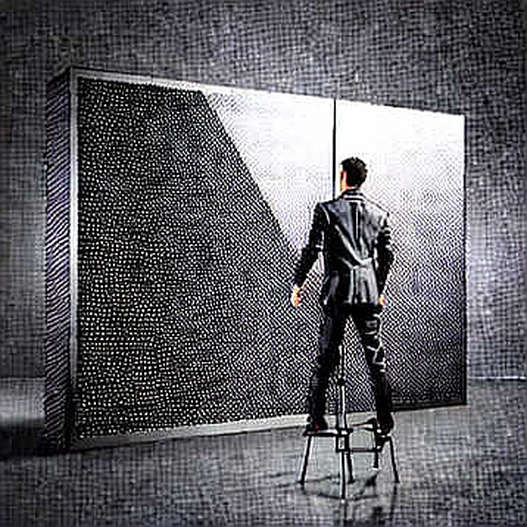
Takeaway: the next narrative isn’t a price target; it’s a reckoning. Will Bitcoin become a museum piece for the rich, or will its code still hold a whisper of sovereignty? Alchemy in the age of open protocols demands we ask whose hands hold the philosopher’s stone. Looking at this rally, I see not a ghost, but a reflection—and it’s wearing a suit.