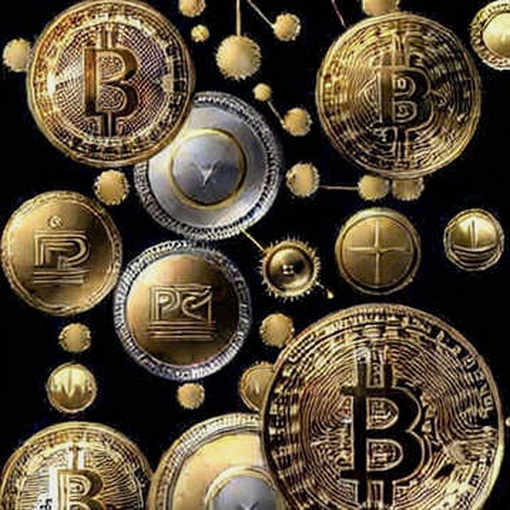
The data shows a textbook event-driven pump. On match day, Erling Haaland scores a hat-trick. Within minutes, a constellation of meme tokens bearing his name surge 500% on decentralized exchanges. Volume explodes, then fades. The code leaves traces—traces of a system designed not for community, but for extraction. Code does not lie, but it does leave traces.
This is not an investment thesis. It is a forensic analysis of a market mechanism that preys on hope. I have spent the last nine years watching these patterns repeat. From the 2017 ICO boom to the 2020 DeFi summer to the 2022 Terra collapse, the signature is always the same: a narrative, a flood of retail liquidity, and then silence. The Haaland tokens are just the latest variant.
Context: The Volatile Intersection of Sports and Crypto
Fan tokens and meme coins occupy a gray zone in crypto’s taxonomy. They are not infrastructure. They are not DeFi protocols. They are speculative assets tied to real-world events—sports matches, celebrity news, social media trends. The industry calls this the “volatile intersection” of sports and crypto. I call it a trap for the unaware.
The first wave of fan tokens came from clubs like Paris Saint-Germain and FC Barcelona, issued through platforms like Socios.com. Those had official backing, some utility for voting, and a semblance of governance. But the tokens that spiked on Haaland’s performance have no such pedigree. They are deployed by anonymous wallets on low-cost chains like BSC or Solana. They are copies of copies. Their only value driver is the hope that someone else will buy higher.
This is not community. This is a pump designed to be dumped. And the structural truth lies in the code.
Core: The Autopsy of a Zero-Value Asset
Technical Verification: The Code Tells the Story
In 2017, I spent eight weeks auditing the 0x Protocol v1 exchange contract. I identified three critical reentrancy vulnerabilities and submitted findings to their GitHub. That experience taught me to read contracts not as a user, but as an adversary. When I look at these Haaland meme tokens, I see nothing but risk.
Most of these tokens are unverified on block explorers. When they are verified, the contract is a standard ERC-20 with a few additional functions: mint, blacklist, pause, or ownership transfer. These are not features; they are weapons. An anonymous team with minting privileges can inflate the supply at any time, diluting every holder. A blacklist function can freeze your wallet. And the owner can pause transfers, locking liquidity.
Trust is verified, never assumed. Here, trust is blindly given to anonymous deployers.
During my 2020 DeFi yield farming experiment, I forked Compound’s source code to understand interest rate models. That was genuine innovation. These meme tokens have zero innovation. They are copy-paste deployments with a name change. The code does not lie—it reveals the absence of thought, the absence of security, the absence of any reason to hold beyond speculation.
Tokenomics: Zero Value Capture
Yield is a symptom, not the cure. But in these tokens, there is no yield. No staking rewards, no fee distribution, no governance voting with real power. The tokenomics of a meme token is a single equation: price = (new buyers) / (supply + minting risk).

Supply is often opaque. The deployer may hold 20-40% of total supply in a wallet. They can sell into the pump at any time. The analysis of token distribution shows extreme concentration. Top 10 wallets often control over 70% of circulating supply. This is not decentralization. This is a centrally planned exit.
In the red, we find the structural truth. The price crash after the event is not a surprise—it is the only guaranteed outcome. The moment the match ends, the narrative catalyst vanishes. There is no recurring use case, no protocol revenue, no demand beyond the next tweet. The token is a dead asset walking.
I saw the same pattern in 2022 with Terra/Luna. The Anchor Protocol’s unsustainable 20% yield was a symptom of centralized risk. Once the yield stopped, the entire ecosystem collapsed. These meme tokens are even worse: they never had any yield to begin with. They are pure speculation on a single news event.
Market Microstructure: The Bots and the Bagholders
During the Haaland match, DEX data shows a flurry of transactions within minutes of the goals. Slippage was extreme—over 20% on some pairs. Liquidity was thin, provided by a single wallet that funded the Uniswap pool with a few thousand dollars. That wallet is the same one that holds the deployer’s supply.
This is a staged pump. The deployer adds liquidity, waits for retail to buy, then removes liquidity or sells into the price spike. The real winners are the bots that front-run the transactions and the deployer themselves. Retail is left holding tokens that are now illiquid or worthless.
Governance is the art of managing disagreement. Here there is no governance, only the will of a few anonymous wallets.
In 2024, I designed a quadratic voting mechanism for a DAO. I saw what real decentralized decision-making looks like. These meme tokens have no decision-making. They have no forum, no proposal system, no multisig. They are a one-way valve for value extraction.
Regulatory Time Bomb
Stability is a bug in a volatile system. Regulation is the ultimate destabilizer for these unregistered securities.
Under the Howey test, many fan tokens exhibit all four elements: investment of money, common enterprise, expectation of profit, and reliance on the efforts of others. The “efforts of others” here is clear—the token value depends on Haaland’s performance and the marketing efforts of anonymous promoters.
If the SEC or a similar regulator decides to take action, these tokens will lose their only remaining value: the ability to trade on DEXs. The resulting crash will be instant and total. No insurance, no recourse.
Contrarian: The Opposite of Decentralization
The mainstream narrative celebrates the “volatile intersection” as a sign of crypto’s reach into pop culture. They see a new user onboarding channel. I see a betrayal of principles.
Decentralization is not just about block production—it is about power distribution. These meme tokens concentrate power entirely in the hands of anonymous deployers. They offer no transparency, no audit trail, no community governance. They are the antithesis of everything the Ethereum whitepaper envisioned.
Trust is verified, never assumed. Here, trust is blindly given to anonymous deployers.
The real opportunity is not to speculate on these tokens, but to build infrastructure that prevents these scams. On-chain monitoring tools, contract verification standards, liquidity lock mechanisms. I have been building such frameworks since my DAO governance work in 2024. The industry needs more of this, not more tokens named after footballers.
Takeaway: A Warning, Not a Celebration
If we are to build a decentralized future, we must first learn to identify the traces of centralization. The Haaland spike is a warning, not a celebration.
Next time you see a 500% pump on a meme token, ask yourself: what code lies behind the hype? The answer is usually nothing. And that nothing will cost you everything.
We build frameworks, not just tokens. And the first framework is skepticism.
Code does not lie, but it does leave traces. Follow the traces. They always lead to the same place—a wallet, an anonymous deployer, and a red chart.
_In the red, we find the structural truth._